
Dear Friends and Supporters,
Each year as the holiday season approaches, we look forward to sharing one of ballet’s most cherished traditions with you: The Nutcracker. Many of you return annually with family and friends, and your enthusiasm reminds us why this production holds such a special place in our company and in our community.
Producing The Nutcracker allows us to bring together dancers of all ages and levels, offering opportunities for our youngest performers to experience the magic of the stage while our advanced dancers take on beloved principal roles. It is a production that helps dancers grow, inspires new generations, and celebrates the joy and dedication that define our art form.
This ballet is also an important part of our company’s sustainability. The Nutcracker’s familiar story and timeless music draw audiences from across the community, helping us welcome many first-time attendees to the world of dance. The support generated through this holiday favorite strengthens our ability to present high-quality performances, offer educational programs, and invest in future productions throughout the year.
Most of all, The Nutcracker creates moments of wonder—moments shared between families, friends, and neighbors who return year after year to celebrate the season together. Your presence keeps this tradition alive, enriching our community and sustaining the work we do.
Thank you for joining us, and for being part of the magic. We are honored to share The Nutcracker with you and wish you a joyful holiday season.
Warmly,
Tauna Brandt
CCJB Executive Director

SYNOPSIS
ACT I
The Party Scene
On Christmas Eve, family and friends gather at the Silberhous’ home to celebrate the holiday. All the children are excited to receive Christmas gifts, especially Clara who is gifted a pair of pointe shoes. Clara and Fritz’s favorite uncle, Herr Drosselmeier arrives and quickly becomes the heart of the party, entertaining the children with mechanical dolls. The children are delighted and eagerly ask him for more. Drosselmeier has one more surprise and presents his favorite creation, the wooden Nutcracker. Clara immediately falls in love with the Nutcracker and begs Drosselmeier to make a life-sized Nutcracker. Disenchanted with his own gift, Fritz becomes jealous and breaks Clara’s Nutcracker. Herr Drosselmeier repairs him. Clara and her friends rock their dolls to sleep with a lullaby. Soon it is time for the traditional grandparents’ dance. With the children tired, the party winds down, and the guests depart. Clara and Fritz are escorted to their rooms and the Silberhaus family retires.
The Transformation
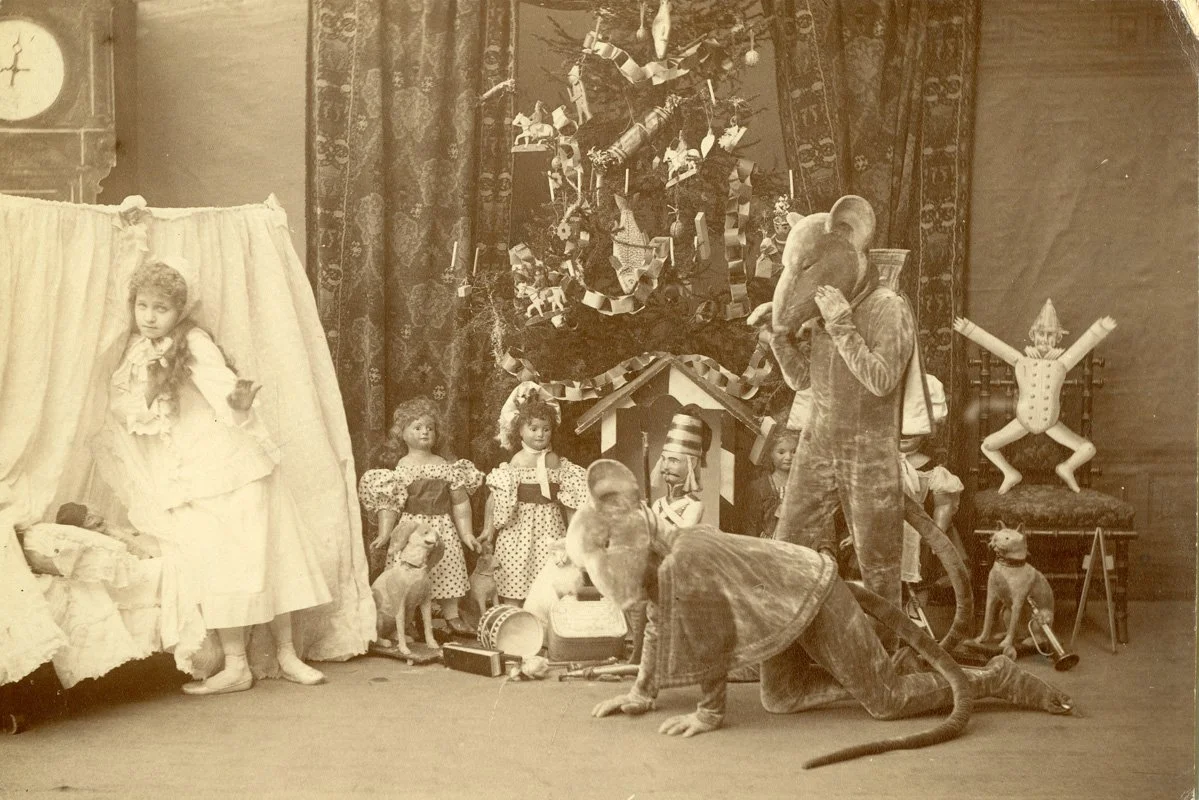
Stanislava Belinskaya as Clara and students of the Imperial Ballet School as mice (1892)
Too excited to sleep, Clara sneaks back to the living room to find her Nutcracker left under the Christmas tree and eventually falls asleep on the sofa. With the house quiet, the mice begin to appear. As the clock strikes midnight, Clara awakens to find her living room filled with mice! The despicable Rat King appears and Clara’s home fills with magic as the Christmas tree grows. Clara’s wish for a life-sized Nutcracker comes true and her Nutcracker Prince appears.
The Battle Scene
The Nutcracker Prince and his tiny soldiers battle the mischievous mice. The monstrous Mouse King fights the Nutcracker Prince and the battle intensifies. The Mouse King seems to have the upper hand until Clara, frightened, throws her slipper at him, enabling the Nutcracker Prince to slay the distracted Mouse King. The grateful Nutcracker Prince invites Clara to join him on a journey through the Magical Forest, where she is lead to the Kingdom of the Sweets.
ACT II
The Kingdom of the Sweets
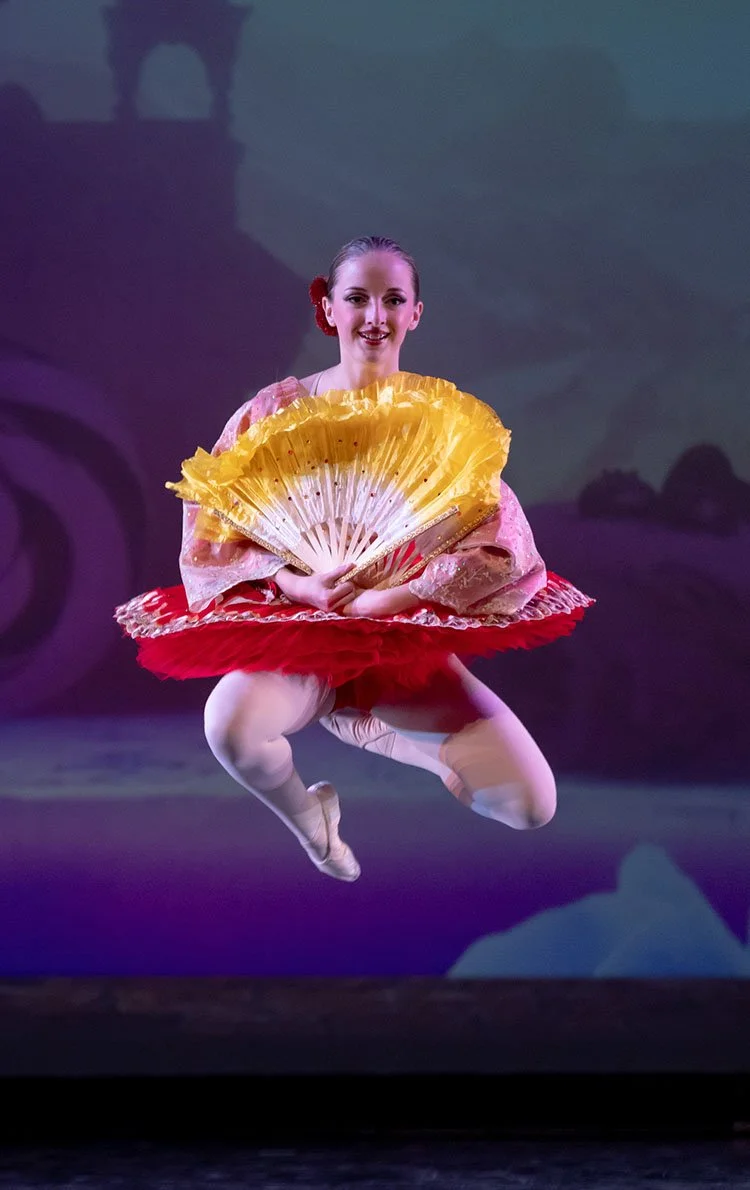
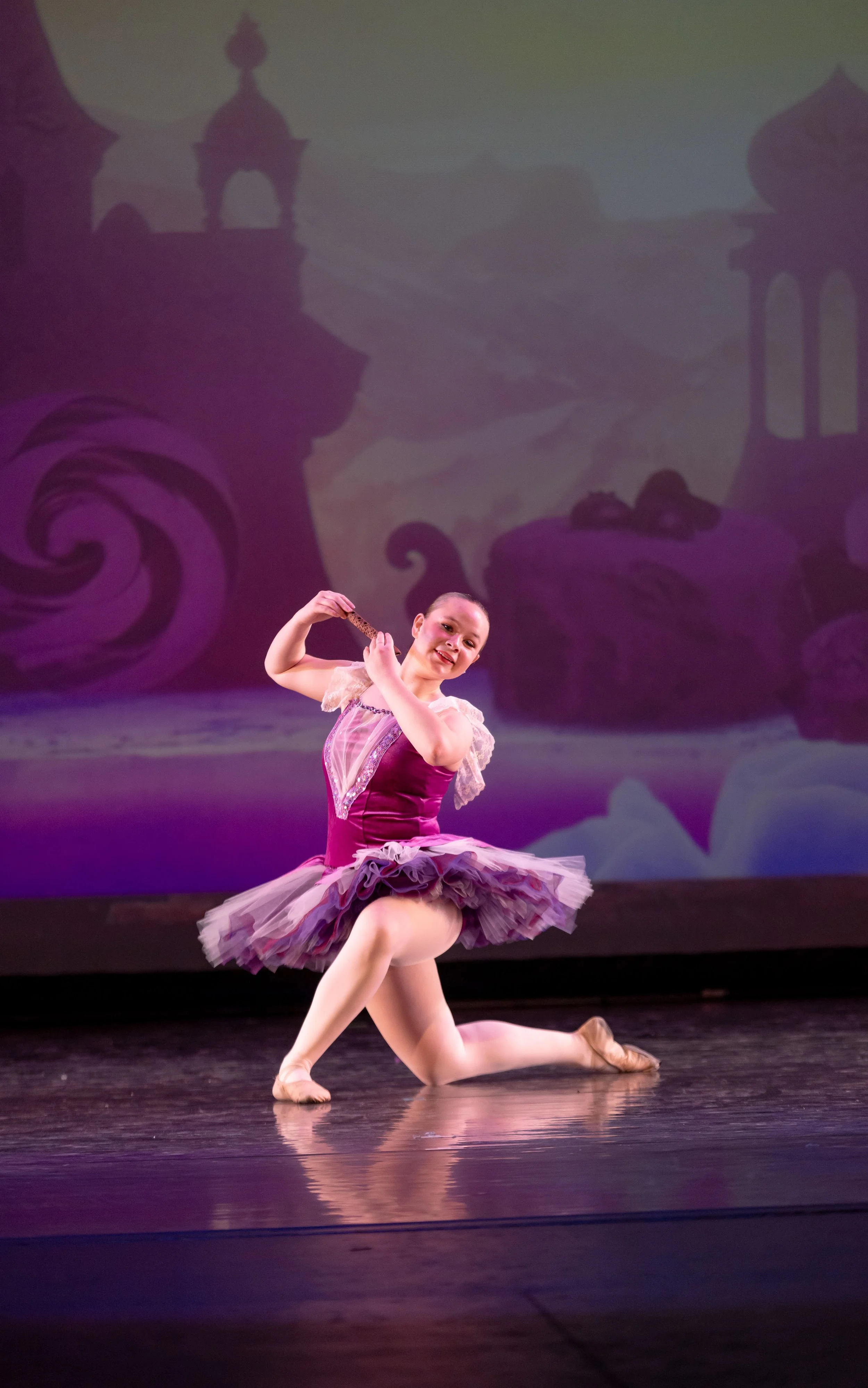
Clara and the Nutcracker Prince arrive at the cloud-covered gates of the Kingdom of the Sweets, where the Sugar Plum Fairy reigns. The Nutcracker Prince tells the court how Clara saved his life. In gratitude, the Sugar Plum Fairy presents Clara with a crown, and festivities commence in Clara’s honor. Showcasing international fair, Spanish Chocolate performs with passion, Arabian Coffee mesmerizes with flourish, Chinese Tea spiritedly dances, and a sweet French Marzipan Danse de Mirliton is performed. The spectacular Russian Troika entertains, followed by Flowers dancing a lilting waltz. The Rose Ballerina and the Nutcracker Prince honor Clara with a grand finale and the entire court joins in the finale.
Mikko Nissinen’s The Nutcracker is based on the libretto by Alexandre Dumas père, titled The Tale of the Nutcracker, which is adapted from E. T. A. Hoffmann’s story The Nutcracker and the Mouse King.
https://www.bostonballet.org/stories/the-nutcracker-synopsis/
CAST
In Order of Appearance
ACT I
Clara: Alta Tibbs
Fritz: Clark Tibbs
Mr. & Mrs. Silberhous: Heather & Derek Hansen
Clara’s Little Sister: Mabel Tibbs
Party Adults: Hannah Brandt, Evy Dodds, Isaac Everett, Sophie Fawson, Angelica M. Gonzalez, Rachel Hansen, Charlotte Wood
Party Children: Laura Alvarez, June Burt, Aly Dodds, Isla Dodds, Elowen Randall, Mabel Tibbs, Ellie White, Kayden Williams, Kendrick Williams, Krio Williams
Little Party Children: Hayden Chappell, Mabel Crosby, Abbey Hanks, Afton Hepworth, Ember Seright
Clara’s Friends: Carrie Hansen, Amelia Randall
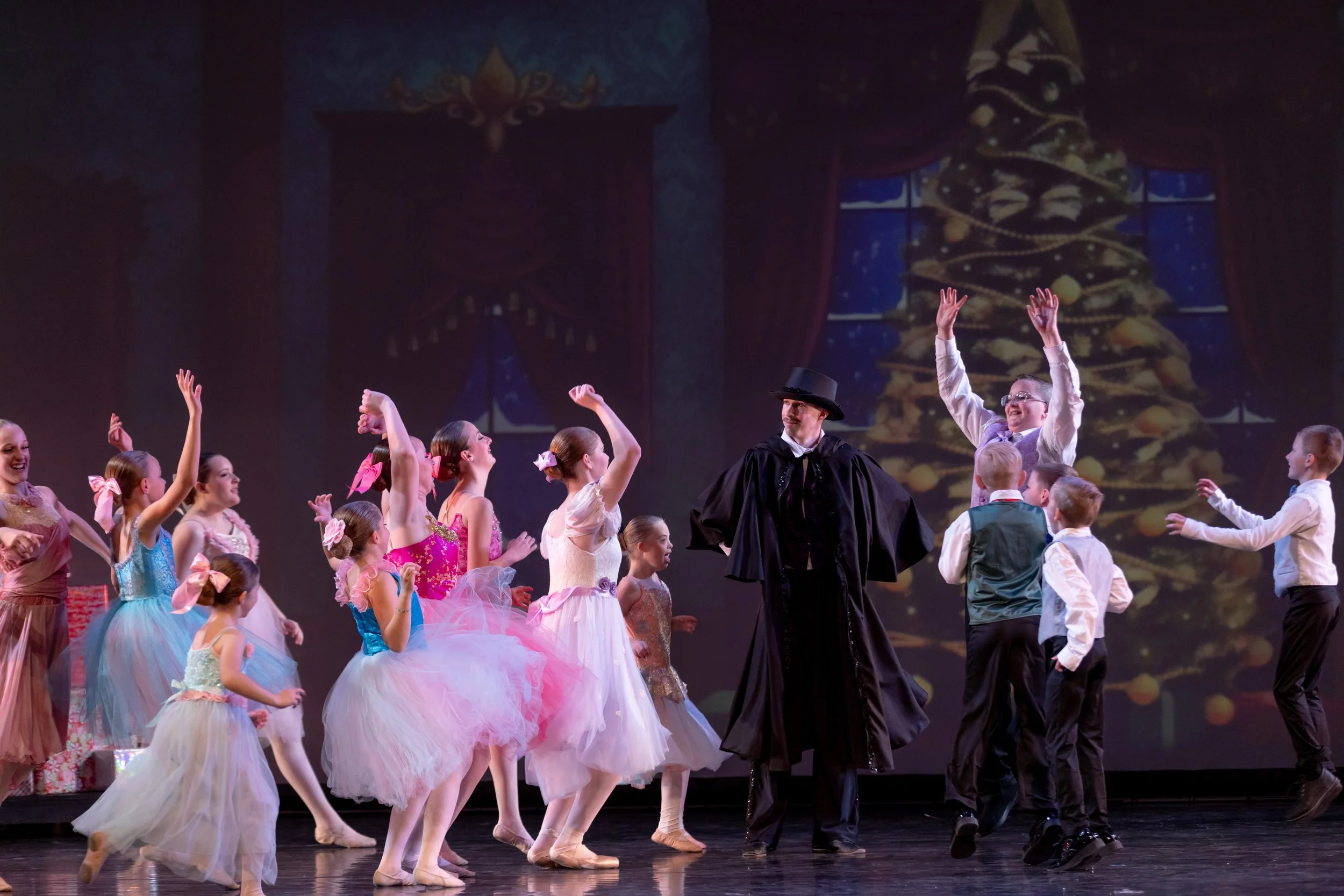
Herr Drosselmeyer: Perry Egan
Pink Doll: Mari Esplin
Blue Doll: Maddy Wood
Mice: Isla Dodds, Dorothy Johnson, Vidah Marie, Claire Tait, Addison Williams
Rats: Laura Alverez, June Burt, Elowen Randall, Ellie White
Mouse King: Perry Egan
Nutcracker Prince: Isaac Everett
Dancing Soldiers: Aly Dodds, Carrie Hansen
Toy Soldiers: Clark Tibbs, Kayden Williams, Kendrick Williams, Krio Williams
Snow Queen: Hannah Brandt
Snow: Evy Dodds, Mari Esplin, Sophie Fawson, Rachel Hansen, Charlotte Wood
Snowflakes: Aly Dodds, Amelia Randall, Elowen Randall, Ellie White
INTERMISSION
(15 MIN)
ACT II
North Star: Mari Esplin
Cherubim: June Burt, Isla Dodds, Vidah Marie, Claire Tait
Angels: Carrie Hansen, Amelia Randall
Sugarplum Fairy: Sophie Fawson
DIVERTISSEMENTS
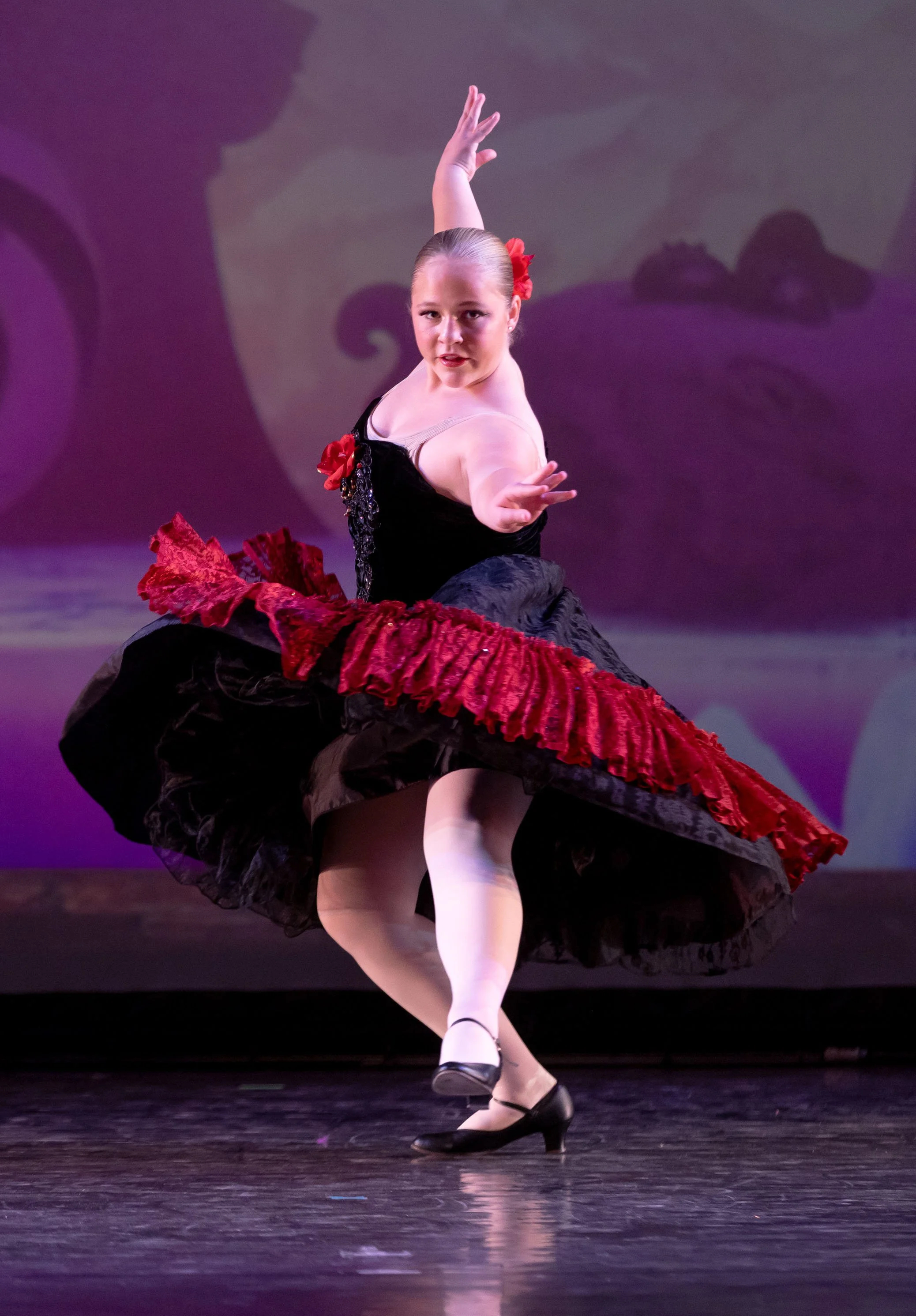
Spanish Chocolate: Mari Esplin
Arabian Coffee: Charlotte Wood, Perry Egan
Chinese Tea: Evy Dodds
Russian Peppermint: Alta Tibbs
Mirliton: Rachel Hansen
Mother Ginger: Maddy Wood
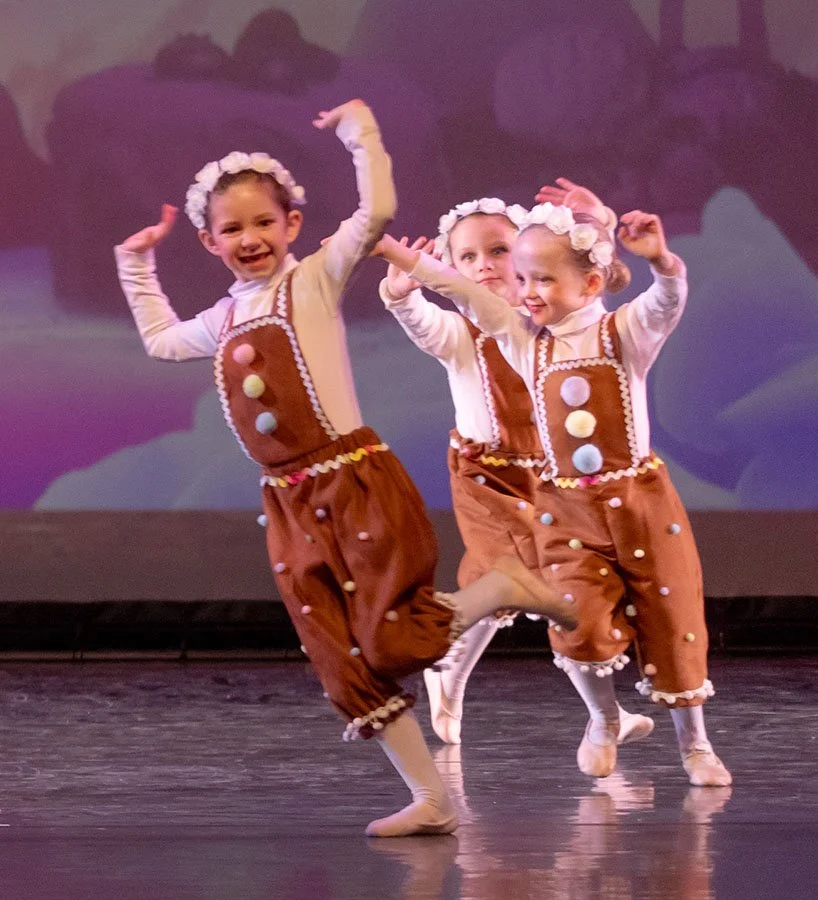
Gingersnaps: Hayden Chappell, Mabel Crosby, Abbey Hanks, Afton Hepworth, Dorothy Johnson, Clark Tibbs, Mabel Tibbs
Polichinelles: Laura Alvarez, Isla Dodds, Ember Seright, Claire Tait
Waltz of Flowers: Hannah Brandt (as Rose Ballerina), Evy Dodds, Mari Esplin, Sophie Fawson (as Sugarplum Fairy), Rachel Hansen, Alta Tibbs (as Clara), Charlotte Wood
Grand Pas de Deux: choreographed by Marius Petipa with adaptations by Hannah Brandt & Isaac Everett
Nutcracker Prince: Isaac Everett
Rose Ballerina: Hannah Brandt
SPECIAL THANKS
Choreography: Dilynn Engbarth
Stage Manager: Marlene Sleight
Lighting Design: Michael Design
Audio Engineer: Ana Olsen
Box Office/Ticketing: Carrington Bonner
Heritage Theater Staff: Jason Clark, Christine Pettit, Michael Westwood
Costume Design & Execution: Stephanie Wood, Katheryn Crosby, Heather Hansen, Lisa Monson and Kayla Randall
Videography: Southern Utah University
Photography: Shane Egan
Social Media Marketing: Codi Hinkley-Green
HISTORY OF THE NUTCRACKER
Published in 1816, the original short story “The Nutcracker and the Mouseking” was written by German writer, composer, and painter Ernst Theodor Amadeus (E.T.A.) Hoffmann. However, Hoffmann’s original story looks quite a bit different from The Nutcracker we have come to know and love. His version of the fantasy was less Sugarplum Fairy and more eerie nightmare, in which the young Marie falls in love with her Nutcracker doll and experiences a violent fever dream in which the Nutcracker conducts gruesome warfare against the Mouse King, who, in Hoffmann’s original had not one, not two, but seven heads!
In 1845, French writer Alexandre Dumas adapted Hoffmann’s short story and published it as The History of a Nutcracker giving the story a lighter and more whimsical tone than the original. In 1891, the Director of Moscow’s Imperial Theatre, Ivan Vsevolozhsky commissioned the story to be turned into a ballet. Composer Pyotr Ilyich Tchaikovsky set it to music, and it was choreographed by Marius Petipa, who is widely considered the father of Russian ballet. The Nutcracker premiered at the Imperial Theatre a week before Christmas 1892 to mixed reviews. The Nutcracker would not be performed outside of Russia until 1934, when it was performed in England. Ten years later, the U.S. would stage its first performance at the San Francisco Ballet.
Whether you’re seeking out a charming Christmas classic, or prefer stories with dark and thorny undertones, The Nutcracker remains timeless in its appeal and innovation. From German origins, to French and Russian adaptation, to wild success across the Atlantic, it reminds us just how magical the season can be when you have a child’s eye for wonder and a mind for imagination.
https://www.bondandgrace.com/lit-talk/the-story-of-the-nutcracker-from-book-to-ballet
NUTCRACKER & THE MUSIC OF TCHAIKOVSKY
After the pair had worked together on The Sleeping Beauty, the choreographer Marius Petipa worked with Tchaikovsky to write the music for a new scenario he had chosen and written out, based on a version by Alexandre Dumas of Hoffmann’s story. Petipa instructed Tchaikovsky down to the last detail, including the tempo and the number of bars in each section.
What has always struck people about Tchaikovsky’s Nutcracker Suite is the astonishing sounds the composer gets from the orchestra – he brings the toys and sweets to life in music that somehow sounds like glittering cut-glass, crystallized ginger, and spun sugar. One innovation was Tchaikovsky’s use of the celesta, the instrument you hear in the ‘Dance of the Sugar-Plum Fairy’ (Petipa said he wanted this dance to sound “like drops of water shooting from a fountain”). The celesta is a keyboard instrument whose hammers hit metal plates, sounding similar to but softer than a glockenspiel; Tchaikovsky had heard one in Paris in 1891 and asked his publisher to buy one, hoping to keep it a secret so that no other Russian would compose music for the instrument before him.
Tchaikovsky’s Nutcracker Suite begins with an ‘Overture’ and ‘March’ before moving into dances from Act 2 of the ballet, which is set in the Land of Sweets. After the ‘Sugar Plum Fairy’s’ dance, we have ‘Russian,’ ‘Arabian,’ ‘Chinese,’ and ‘Reed Flute’ dances – though the ‘Arabian’ one (which Rattle calls “absolutely heartbreaking – how the strings and oboe and cor anglais sing out over it”) is actually based on a Georgian cradle song. The Nutcracker Suite concludes with the famous ‘Waltz Of The Flowers’ evoking elegance and grandeur.
Most of the dances have a couple of ‘verses’ that use the same tune, just orchestrated differently. Notice how Tchaikovsky keeps the sound crystalline and transparent when he uses the whole orchestra, as when there are just a couple of flutes playing.
https://www.udiscovermusic.com/classical-features/tchaikovsky-nutcracker-suite/
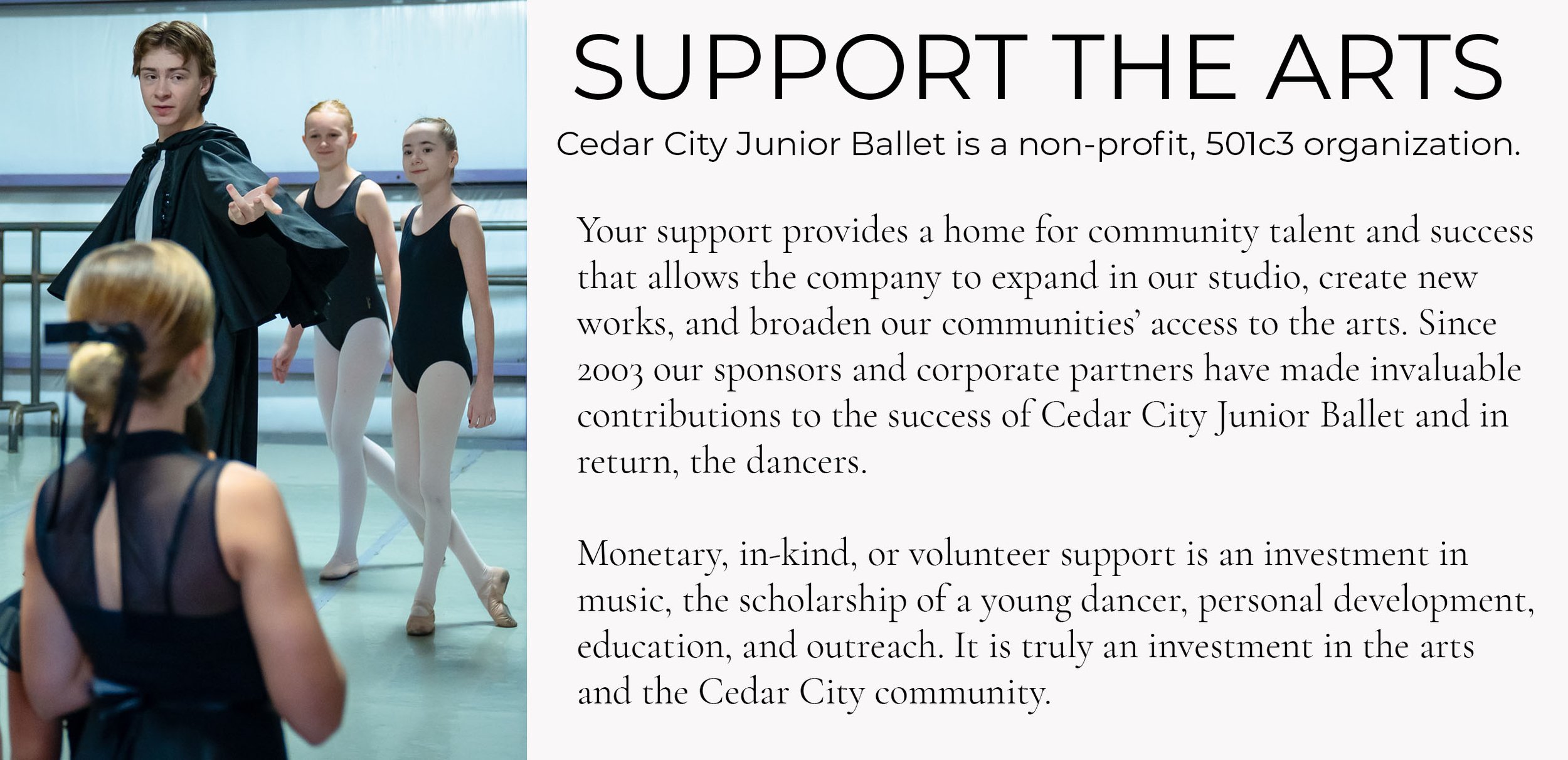
TO DONATE
https://www.cedarcityjuniorballet.org/donations-sponsorships or Venmo @CedarCity-JuniorBallet
Experience the magic and mystery of our 2026 season’s ballets
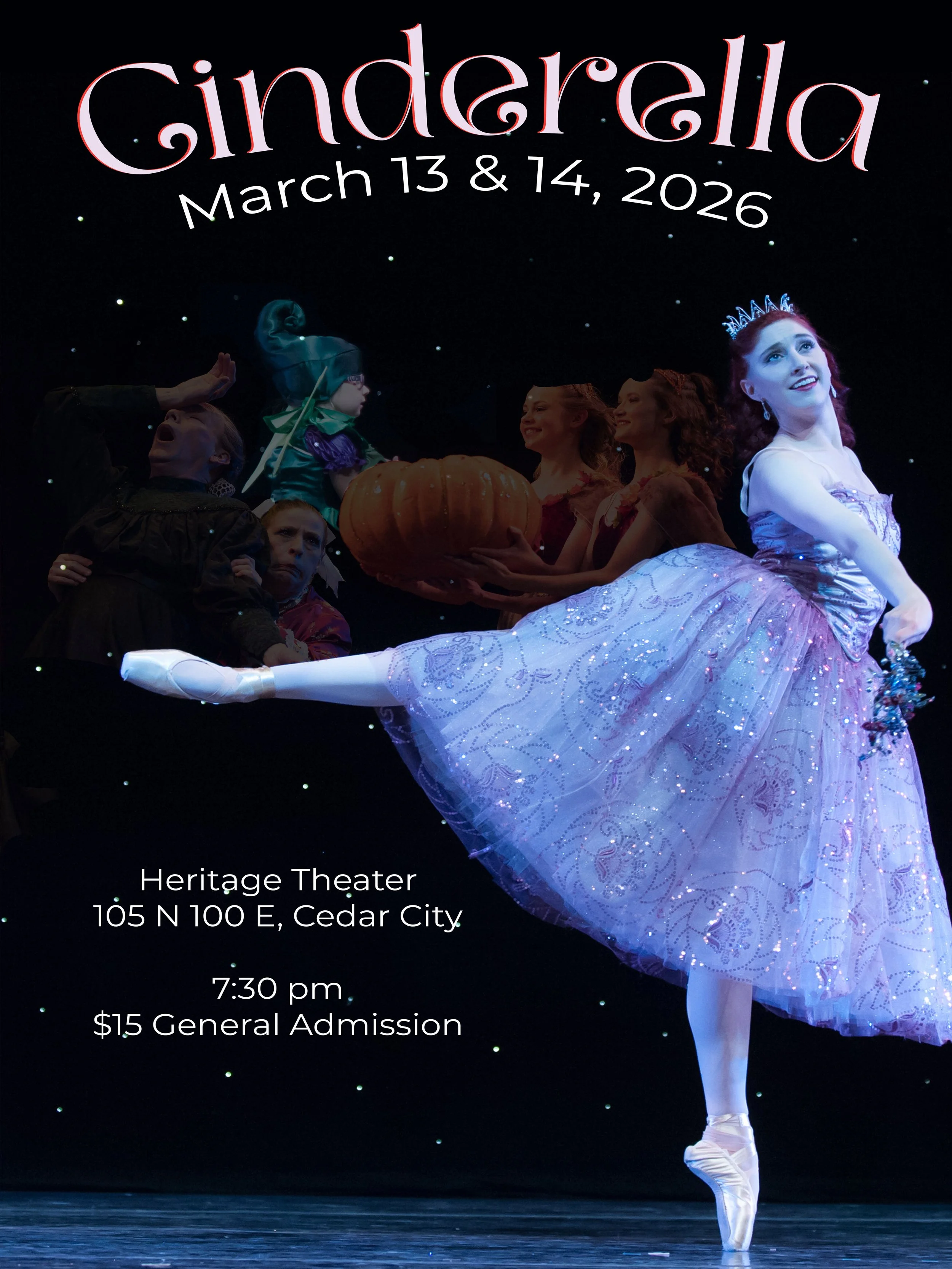
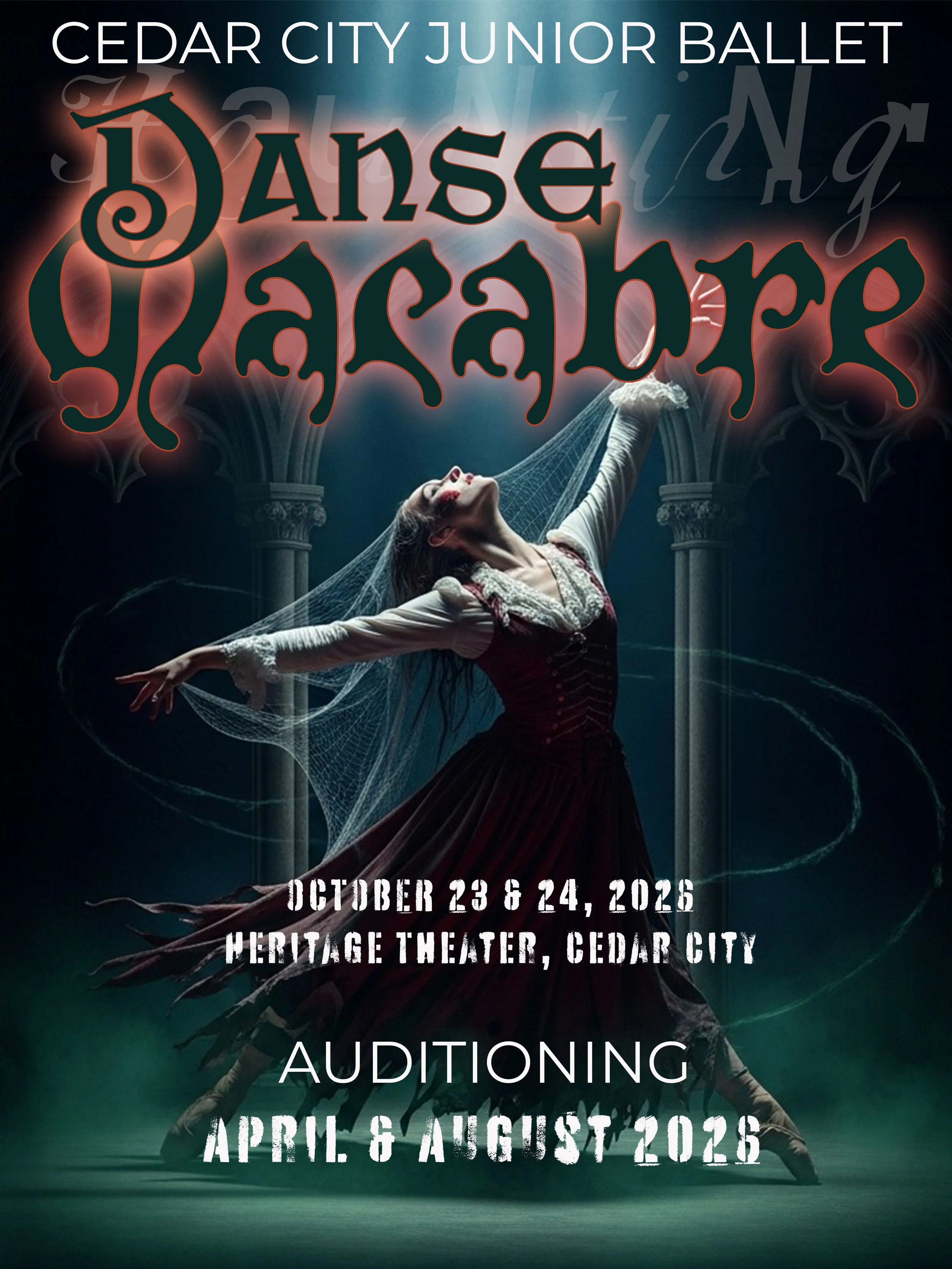
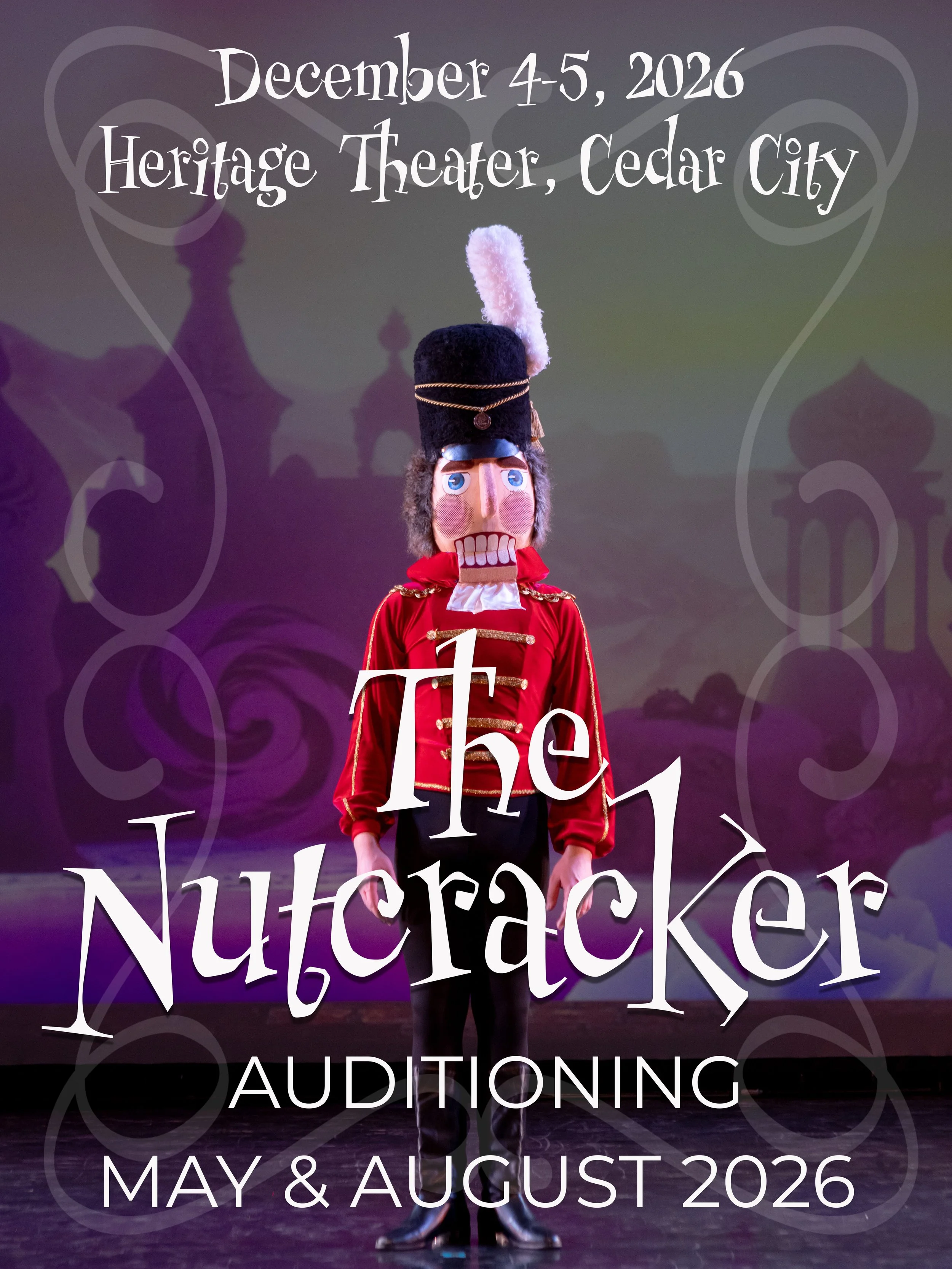
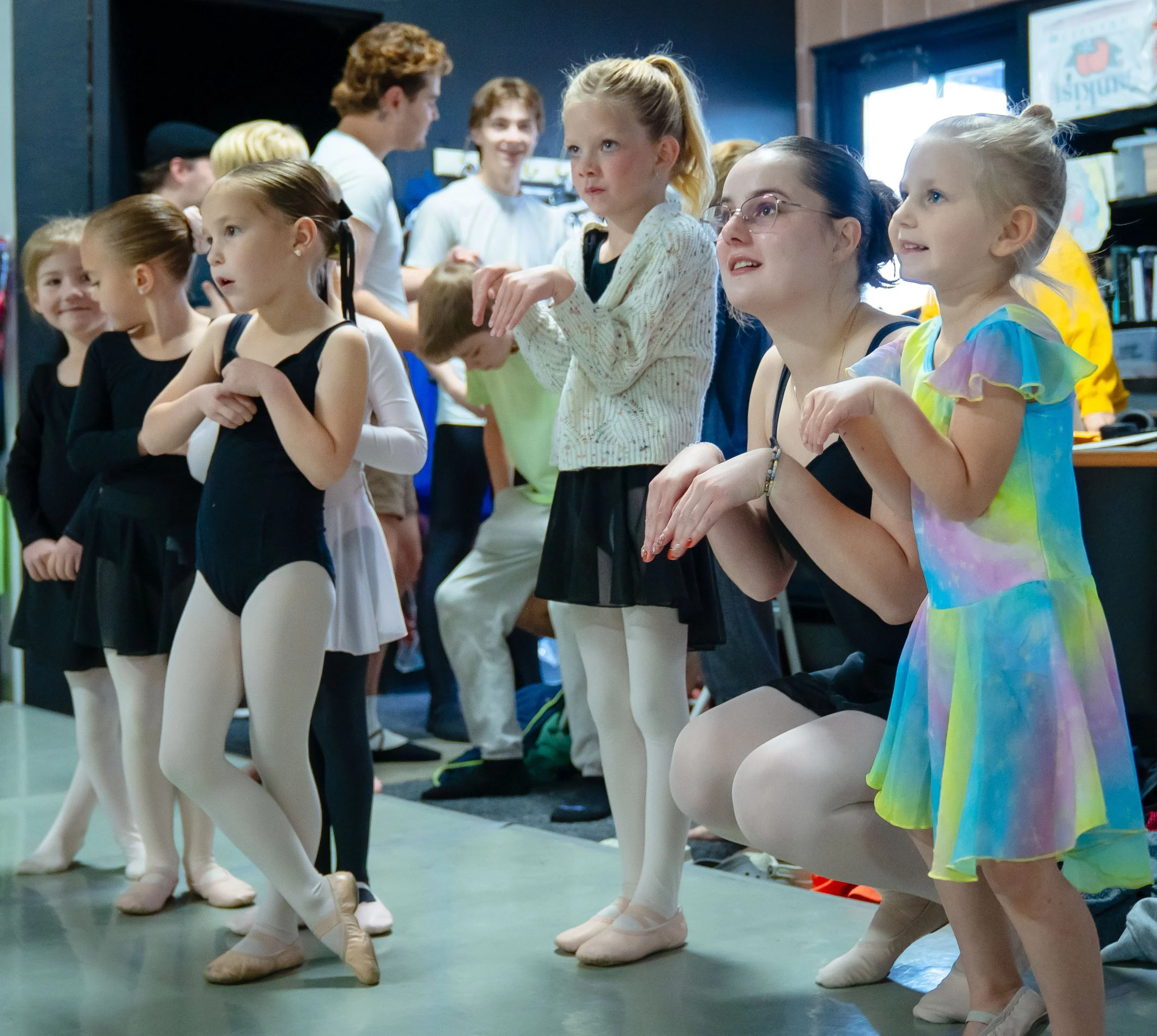
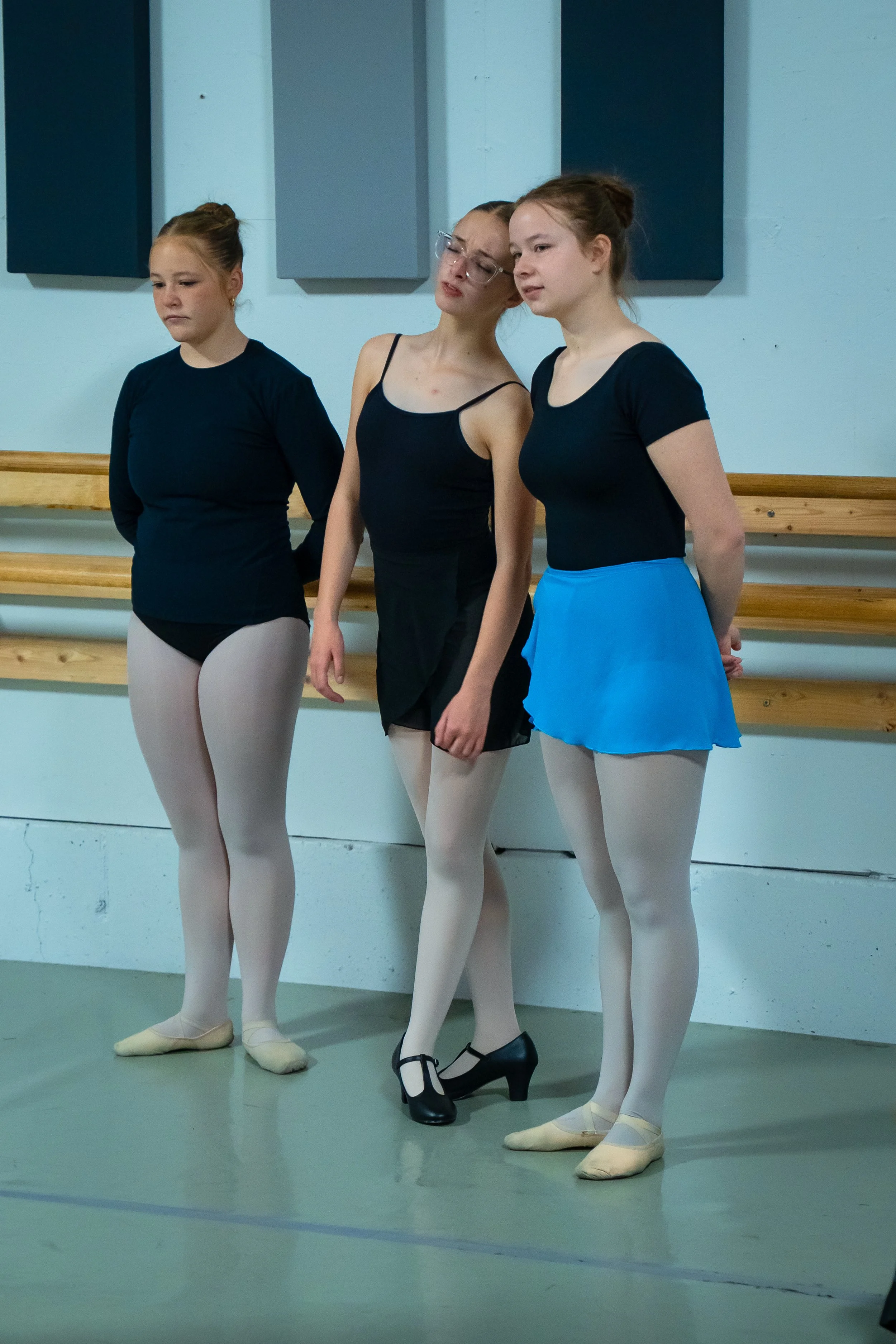
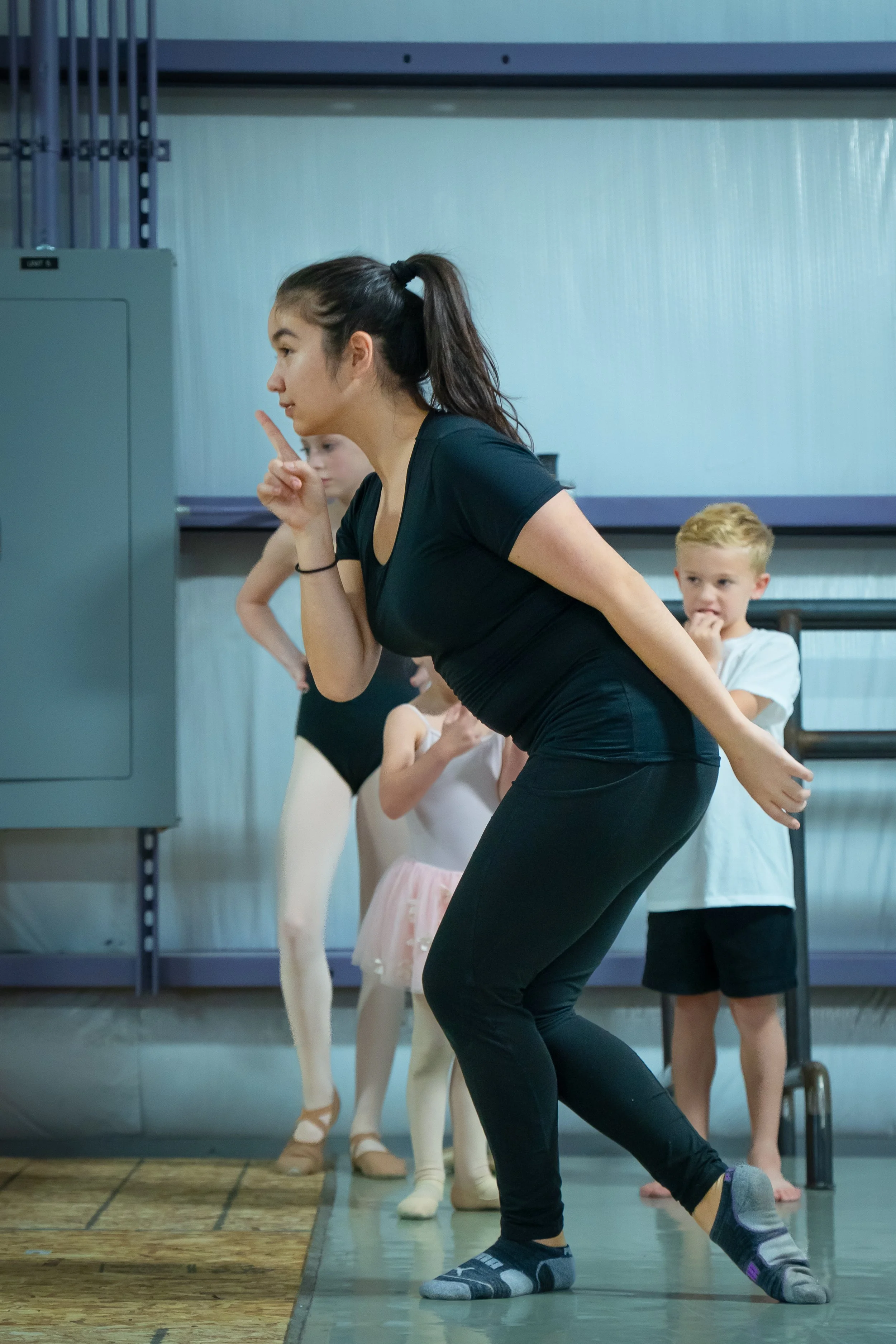
Photos by Shane Egan