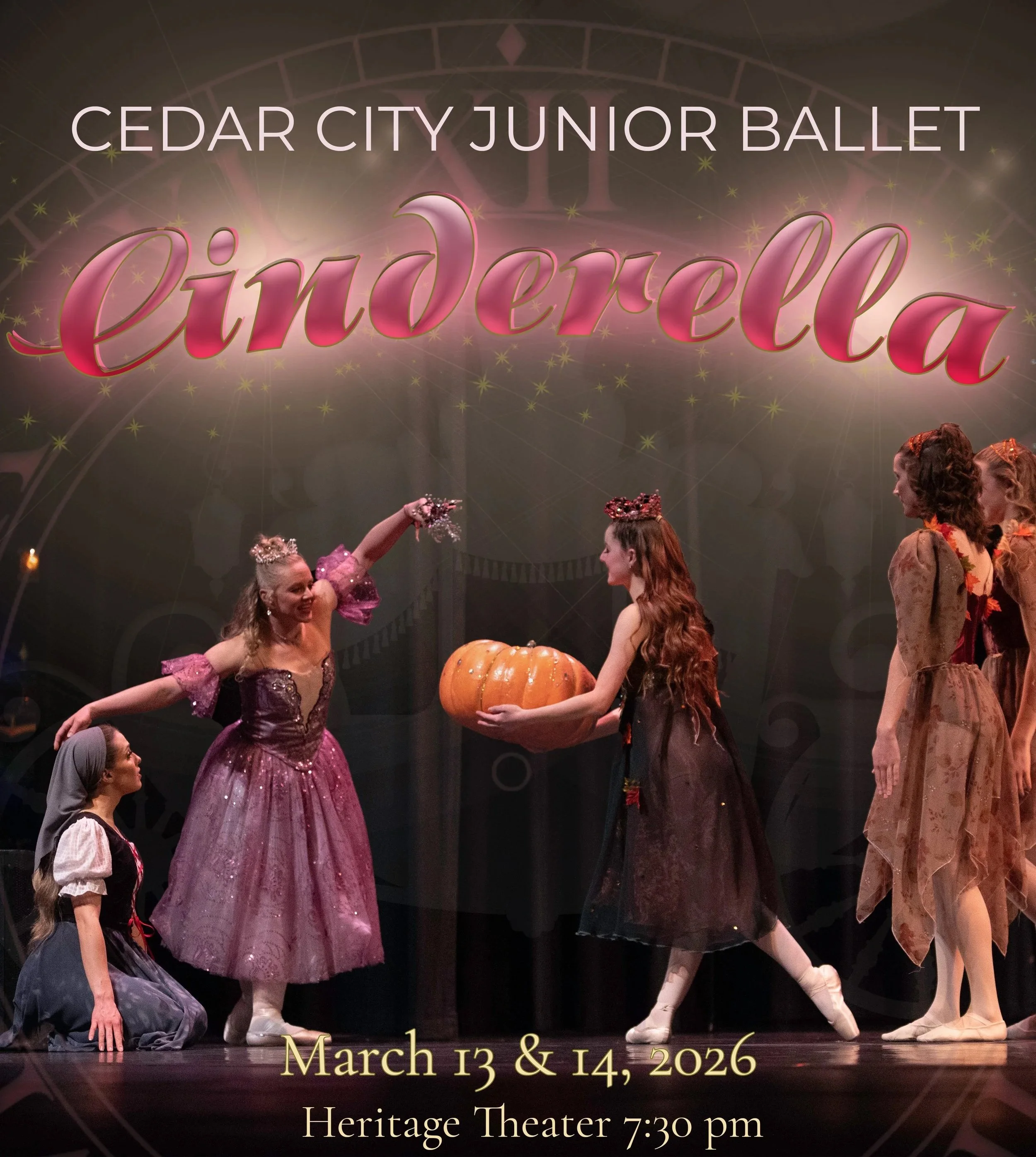
We are delighted to welcome you to our production of Cinderella. Cinderella’s story is filled with humor, romance, and choreography that traces from early versions in 1813 to Sergei Prokofiev’s 1945 version. This beloved ballet reminds us that kindness, perseverance, and a little bit of magic can transform even the most ordinary moments into something extraordinary. Our dancers and artistic team have worked with great dedication to bring this timeless story to life, and we are honored to share their talent and passion with our community.
Thank you for supporting the arts and for being part of this performance.
With gratitude,
Tauna Brandt
CCJB Executive Director

SYNOPSIS
ACT I
As the curtain opens, Cinderella’s two Stepsisters are embroidering a silk scarf. They squabble over who will eventually wear it. A beggar woman appears in the kitchen, and the Stepmother shoos her away. Cinderella tells the old woman that she has no money to give her; but gives her some bread, instead. The Beggar Woman leaves as mysteriously as she arrived.
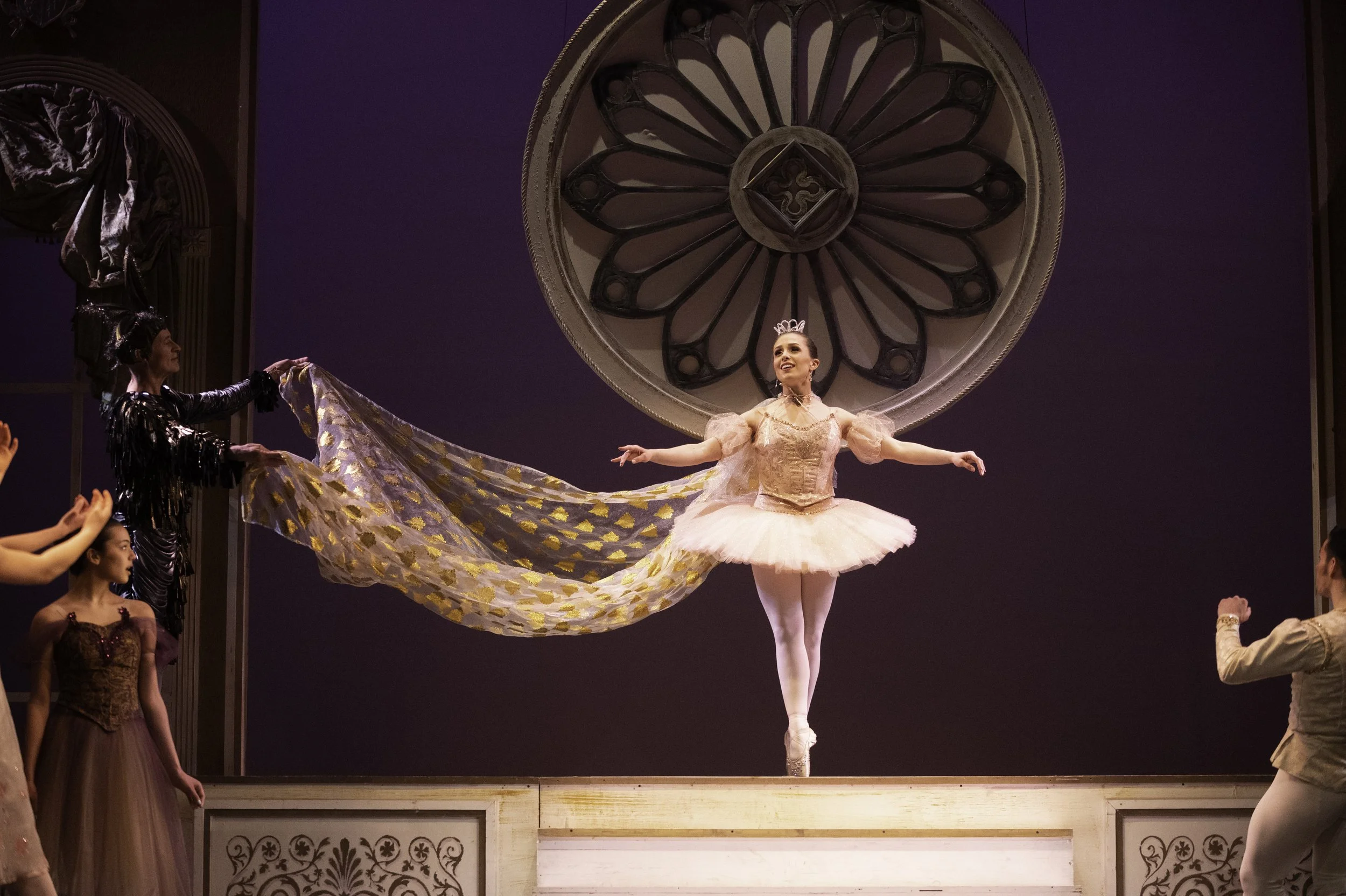
Unexpectedly, an invitation to the Prince’s Ball arrives. He is seeking out all eligible women to be considered as his bride. The Stepsisters are in a dither because they have nothing to wear. Cinderella’s Stepmother orders the maids to quickly purchase new gowns for the sisters. Then the Dancing Master is called in for a last-minute polish to the Stepsisters’ technique.
The Stepsisters leave for the ball, leaving Cinderella behind only to dream of what it must be like to attend a Royal Ball. Her friends, the cat and some little mice all dance with her to try to get her spirits up. Then the old Beggar Woman appears again, and this time reveals herself to be Cinderella’s Fairy Godmother.
The Fairy Godmother calls on the Fairies of the Four Seasons to dance for Cinderella and bring her gifts. The Fairy of Spring gives Cinderella crystal dancing slipper, the Fairy of Summer brings her a golden cloak, the Fairy of Autumn brings a pumpkin which the Fairy Godmother weaves a magic spell to change it into a carriage, and the Fairy of Winter offers Cinderella a beautiful crown. The Fairy Godmother then summons little Sprites and Butterflies to remind Cinderella that she must be home by midnight when the magic spell will end. The Fairies of the Four Seasons and Magickal Spirits dance a waltz and send Cinderella on her way to the ball.
INTERMISSION (15 Minutes)
ACT II
The Royal Court awaits the arrival of the prince, whom it is said will make his choice for a bride this evening. When the Prince arrives, he is bored with the girls he finds, especially the Stepsisters whom he finds particularly appalling. Oranges, priceless treasures, are given to the two sisters. Then there is a hush and the Fairies and their cortege of Elementals enter the ballroom hailing Cinderella’s arrival. The Prince falls immediately in love with her but before he can discover her name, the clock strikes twelve and the beautiful girl dashes up the staircase leaving one of her dainty, crystal slippers behind.
INTERMISSION (15 Minutes)
ACT III
Cinderella wakes up the morning after the ball and relives each wonderful moment with the Prince. After her Stepsisters go through their usual morning routine of making her life miserable, the Prince and his entourage suddenly arrive at the house, having been going door to door trying to find the girl whose foot fits the crystal slipper.
He finds Cinderella, all the Fairies and Magickal creatures rejoice, and of course, they live happily ever after.
CAST
In Order of Appearance
ACT I
Cinderella: Evelyn Dodds
Ditzy Stepsister: Lynnette Imlay
Haughty Sister: Marlene Sleight
Stepmother: Sheral Fish
Petunia the Cat: Eleanor Sjogren
Maids: Rachel Hansen, Charlotte Wood
Cupboard Mice: Hayden Chappell, Mabel Crosby, Isla Dodds, Abbey Hanks, Madelyn Hudson, Remie Hudson, Dorothy Johnson, Kierra Swope, Kendall Werber
Dance Master: Perry Egan
Violinists: Delainey Boudreau, Amelia Randall
Fairy Godmother: Maddy Wood
Spring Fairy: Mari Esplin
Spring Butterflies: June Burt, Mabel Crosby, Alyson Dodds, Isla Dodds, Carrie Hansen, Remie Hudson, Kierra Swope, Kendall Werber
Summer Fairy: Sophie Fawson
Sunbeams: Hayden Chappell, Summer Corry, Abbey Hanks, Adalyn Randall, Elowen Randall, Ellie White,
Autumn Fairy: Charlotte Wood
Fall Leaves: Delainey Boudreau, Rachel Hansen, Kaylee Melessa, Eleanor Sjogren, Alia Walker
Winter Fairy: Endrica Hardwick
Snowflakes: Summer Corry, Carrie Hansen, Amelia Randall, Elowen Randall, Ellie White, Sidney Winterfell
Clock Fairies: Hayden Chappell, Mabel Crosby, Isla Dodds, Dorothy Johnson, Abbey Hanks, Madelyn Hudson, Kierra Swope, Kendall Werber
ACT II
Jester: Shane Egan
Attendants: Summer Corry, Carrie Hansen, Kaylee Melessa, Adalyn Randall, Elowen Randall, Ellie White, Sidney Winterfell
Magick: Delainey Boudreau, Alyson Dodds, Carrie Hansen, Rachel Hansen, Jaylee Joseph, Amelia Randall, Eleanor Sjogren, Alia Walker
Ditzy Stepsister: Lynnette Imlay
Haughty Stepsister: Marlene Sleight
Dance Master: Perry Egan
Paige: June Burt
Stepmother: Sheral Fish
Prince: Isaac Everett
Spring Butterflies: June Burt, Remie Hudson
Spring Fairy: Mari Esplin
Summer Fairy: Sophie Fawson
Autumn Fairy: Charlotte Wood
Winter Fairy: Endrica Hardwick
Fairy Godmother: Maddy Wood
Cinderella: Evy Dodds
Clock Fairies: Hayden Chappell, Mabel Crosby, Isla Dodds, Dorothy Johnson, Abbey Hanks, Madelyn Hudson, Kierra Swope, Kendall Werber
ACT III
Cinderella: Evy Dodds
Ditzy Stepsister: Lynnette Imlay
Haughty Stepsister: Marlene Sleight
Stepmother: Sheryl Fish
Maids: Rachel Hansen, Charlotte Wood
Petunia the Cat: Eleanor Sjogren
Jester: Shane Egan
Prince: Isaac Everett
Fairy Godmother: Maddy Wood
HISTORY OF THE CINDERELLA TALE
Cinderella is one of the most well-known stories around the world. This story appears in the folklore of many cultures. There are between 350 and 1,500 different versions of this story in the world today. The story is based around a kind young lady (the heroine), who suffers at the hands of her stepfamily after the death of her mother. In some stories her father is absent, while in other versions he neglects Cinderella.
The heroine has a magical guardian who helps her triumph over her nasty family and receive her greatest wish by the end of the tale. The guardian is sometimes a representative of the heroine’s dead mother. In most tales she is referred to as the Fairy Godmother. Most of the tales include a magical event sparked by an article of clothing, usually a shoe or glass slipper, that causes the heroine to be recognized for her true worth.
The earliest recorded version of the Cinderella tale comes from China. It was written by Tuan Ch’eng-shih in the middle of the ninth century A.D. (850-60 Common Era). From the way it was written, it is thought that readers were already familiar with the story and that this version was the first to be written down. In the Chinese story the heroine is called Yeh-shen and there is no Fairy Godmother. Instead, there is a magical fish who helps Yeh-shen. A golden shoe leads the prince to her and they marry.
The next written version came from a Frenchman, Charles Perrault. He wrote the version in 1697 and introduce the Fairy Godmother. This story also included the pumpkin carriage, the animal servants, and the glass slippers. Perrault was told this story by storytellers and added these extra things for effect. Some people think that he confused “vair”, French for fur with “verre”, French for glass which would explain how the slipper came to be made of glass. Also in his version, Cinderella finds husbands for her sisters at the end.
The Grimm Brothers’ version, known as Aschenputtel or Ash Girl does not have a Fairy Godmother. In their story, the heroine plants a tree on her mother’s grave, and a white dove helps with the magic. Because of their cruelty to Cinderella, the stepsisters have their eyes pecked out by birds. In modern times, the tale of Cinderella has been retold in books, musicals, novels, and dreams of little girls.
THE MUSIC OF CINDERELLA AND ITS COMPOSER
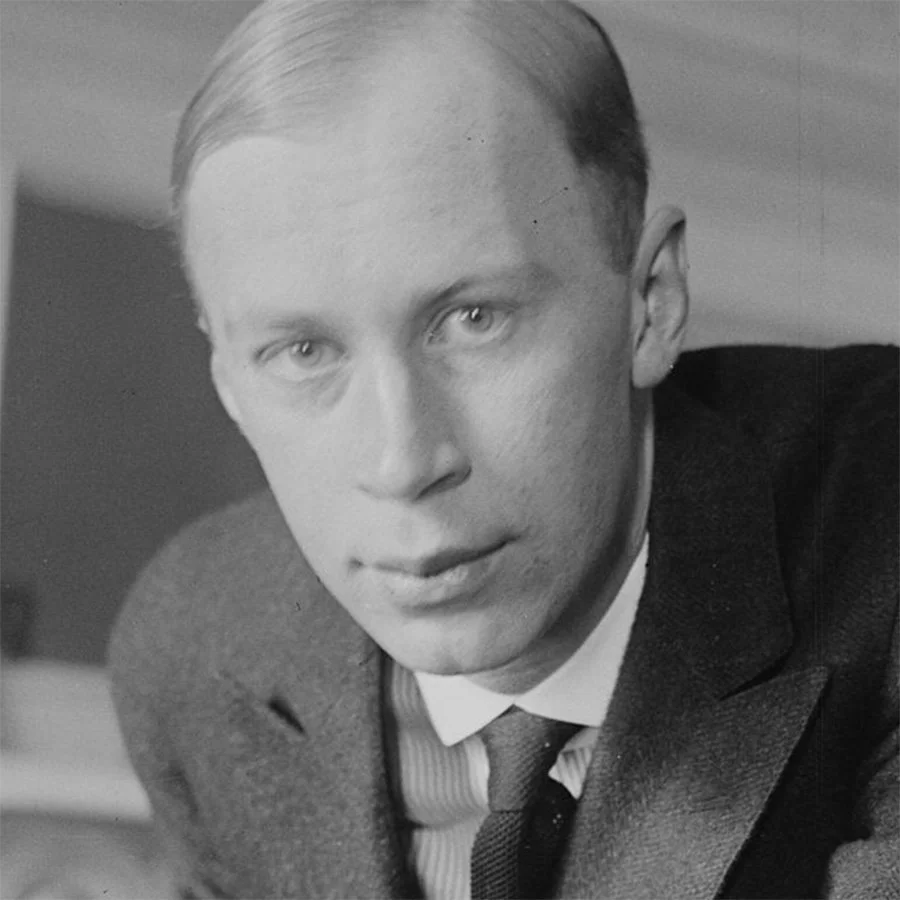
Sergei Prokofiev was born in Russia on April 27, 1891. He began studying piano with his mother at age three showing remarkable talent early on. By five he had composed Indian Gallop, and by nine he wrote his first opera, The Giant.
Prokofiev was deeply involved with fantasy and fairy tales all his life. Following the successful production of Romeo and Juliet at the Kirov in Leningrad, the company asked the composer for another ballet. Prokofiev completed the first two acts of Cinderella in a piano score in June of 1941 but he work was laid aside when with World War II and the German invasion on June 22. Two years later, Prokofiev resumed work on Cinderella expecting that it would be performed by the Kirov company. In the end the first performance went not to the Kirov, but to the Bolshoi in Moscow.
Some composers have deliberately downplayed or eliminated the fairy tale elements of Cinderella’s story. Prokofiev did the opposite. “A major role in my work on Cinderella,” he wrote, “was played by the fairy-tale nature of the subject, which faced me as the composer with a number of interesting problems, the mysteriousness of the good godmother fairy, the vivid and poetic breath of nature in the figures of the four fairies of the seasons of the year and their attendants, the fantasy of the twelve dwarfs leaping from the clock at midnight and beating out a tap dance reminding Cinderella to return home, the swift alternation of the countries of the world visited by the prince in search of Cinderella.”
In addition to Cinderella, Romeo and Juliet, other famous works of Prokofiev include Peter and the Wolf. His music was innovative, bringing unusual harmonies, energetic rhythms, and humor to concert halls. He died on March 5, 1953 and is remembered as one of the most admired composers of the twentieth century.
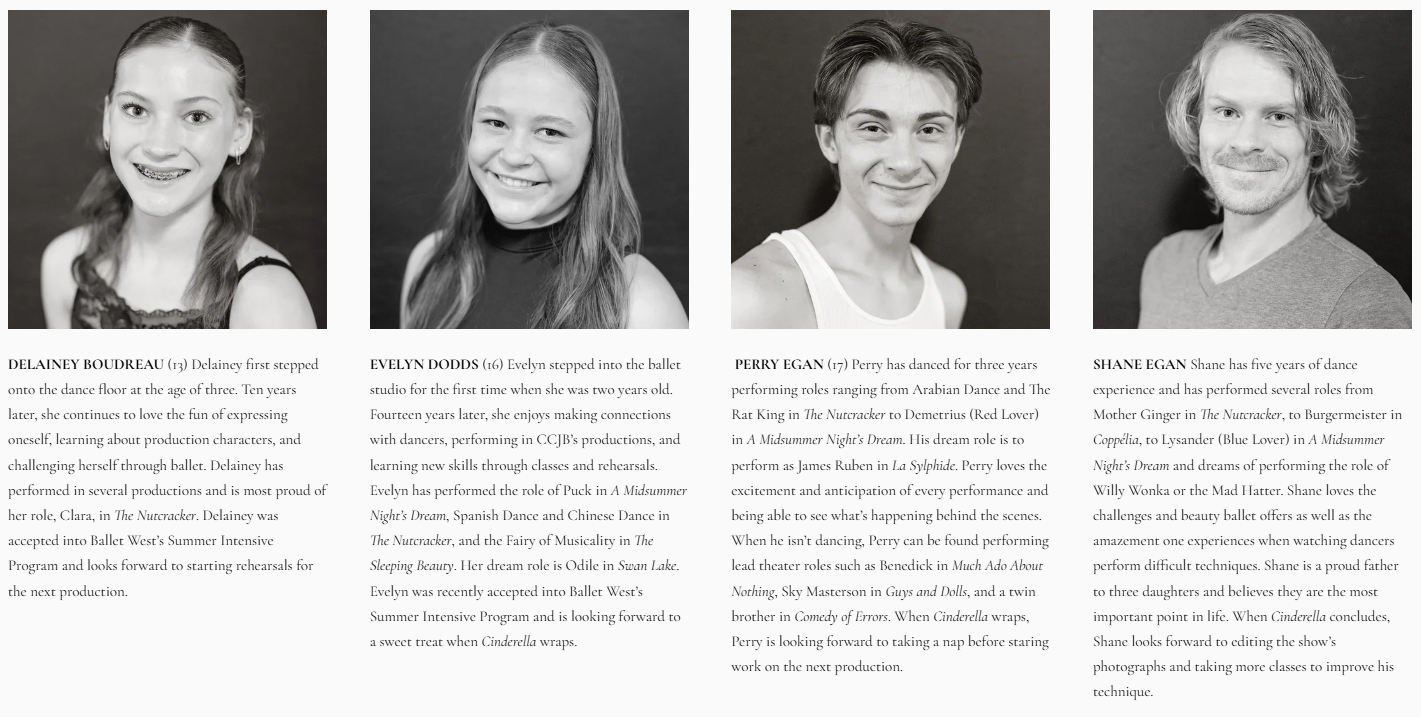
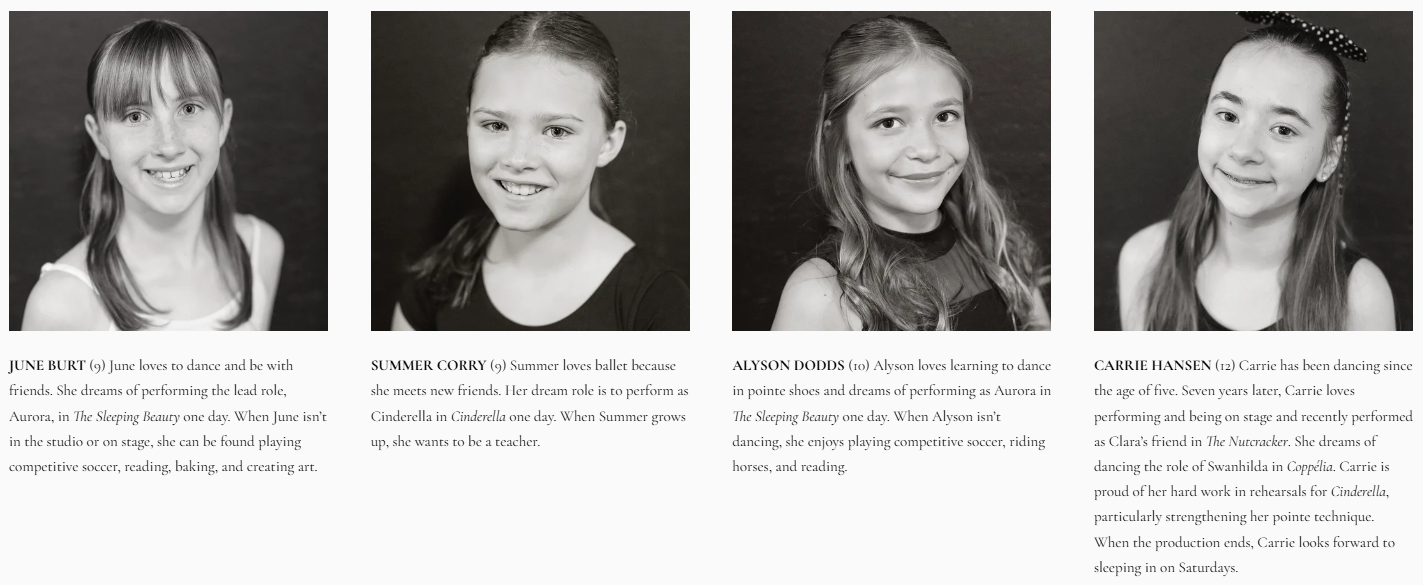
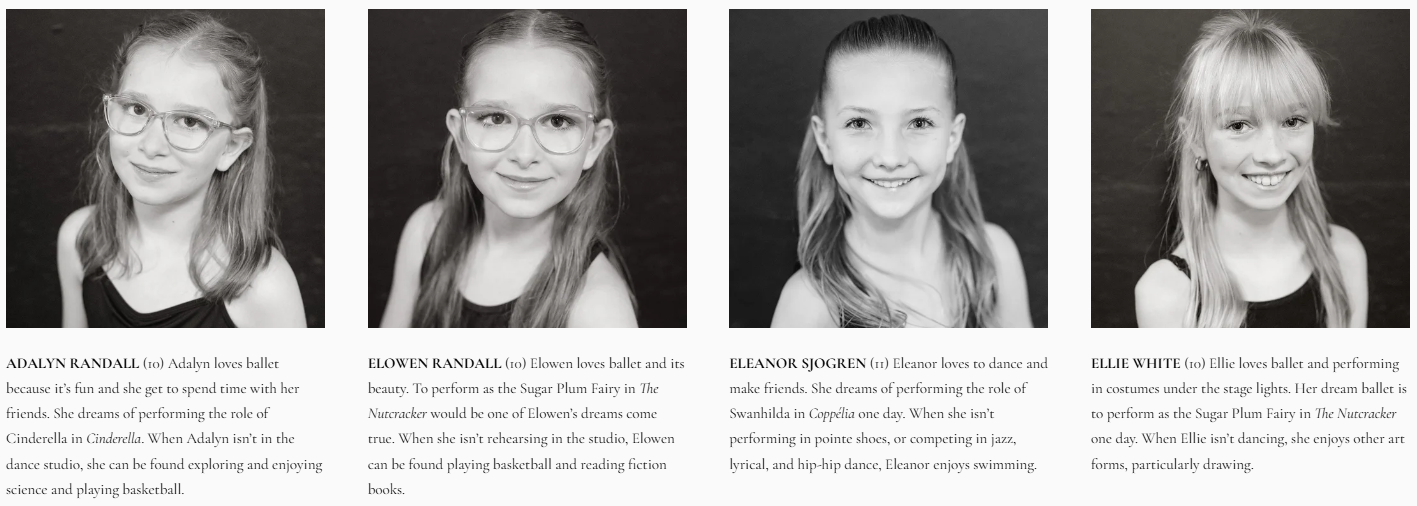
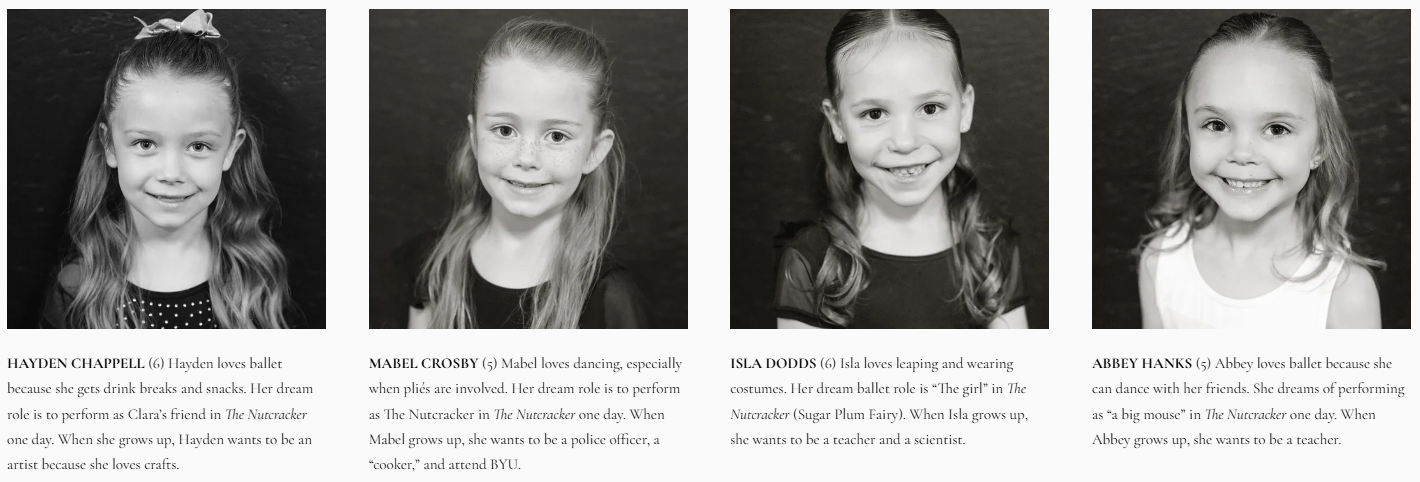
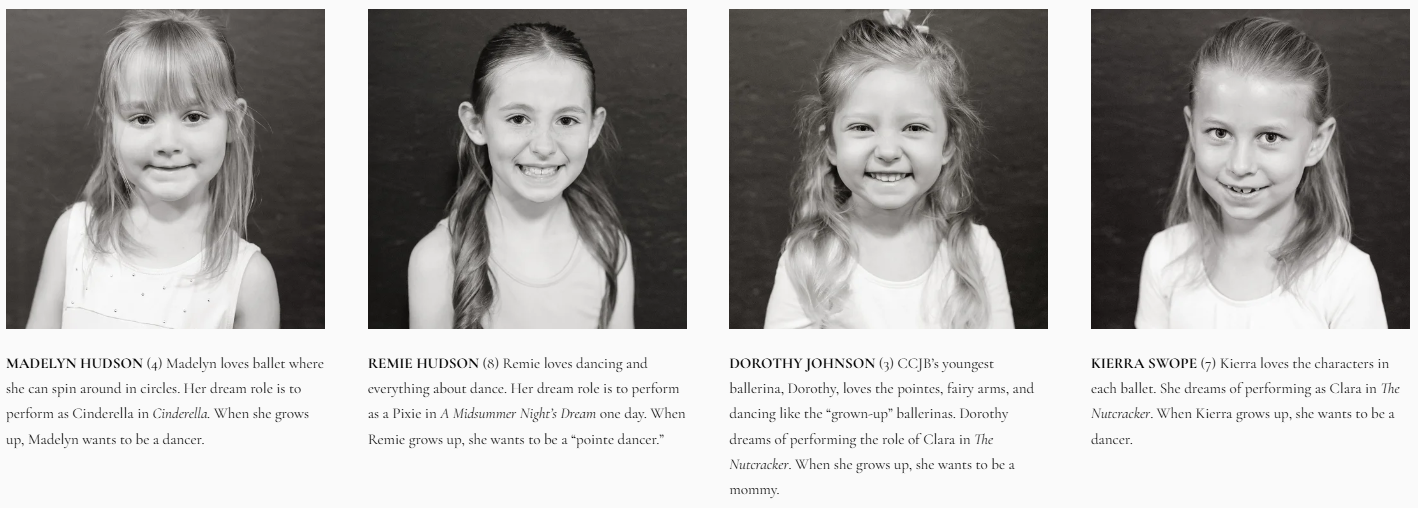
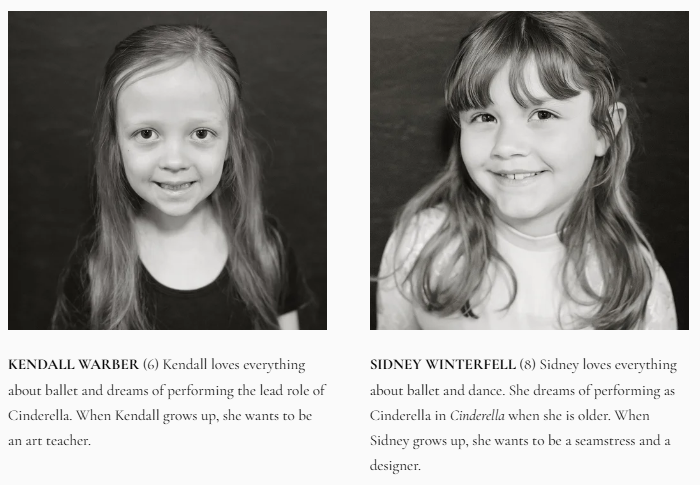
MEET THE CAST
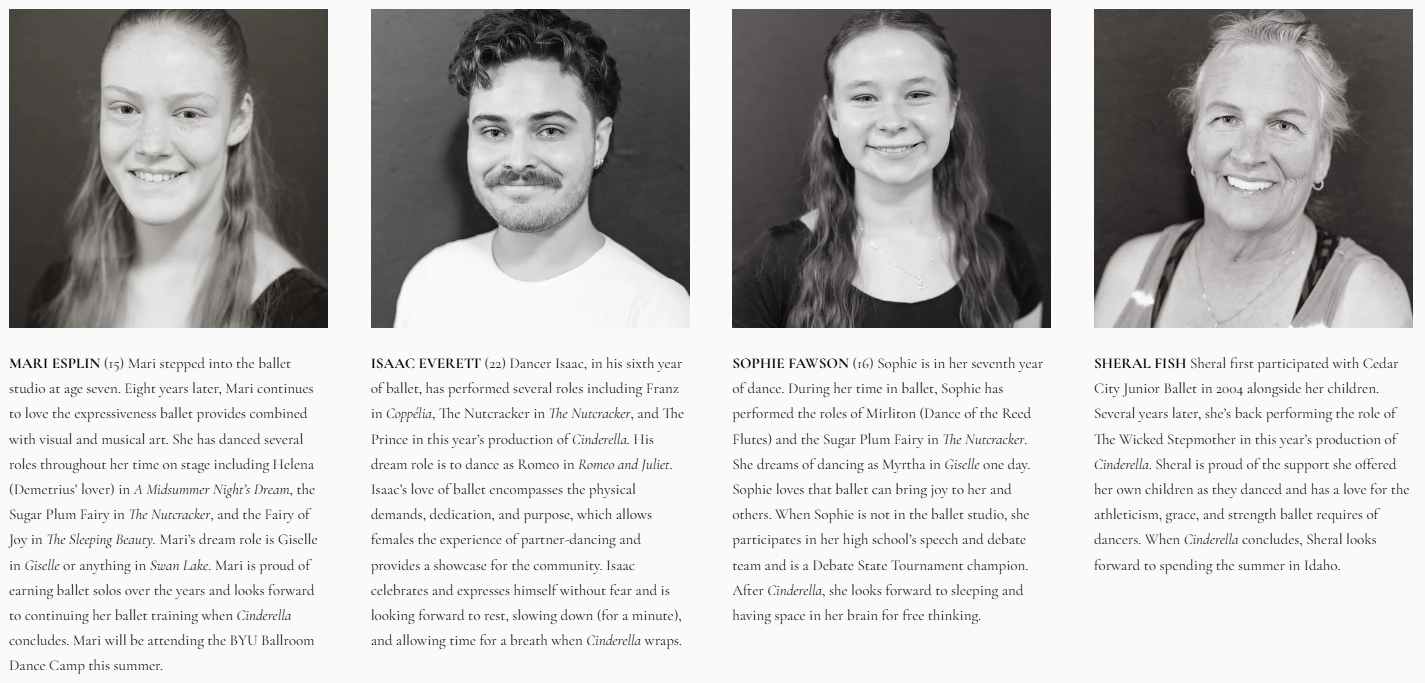
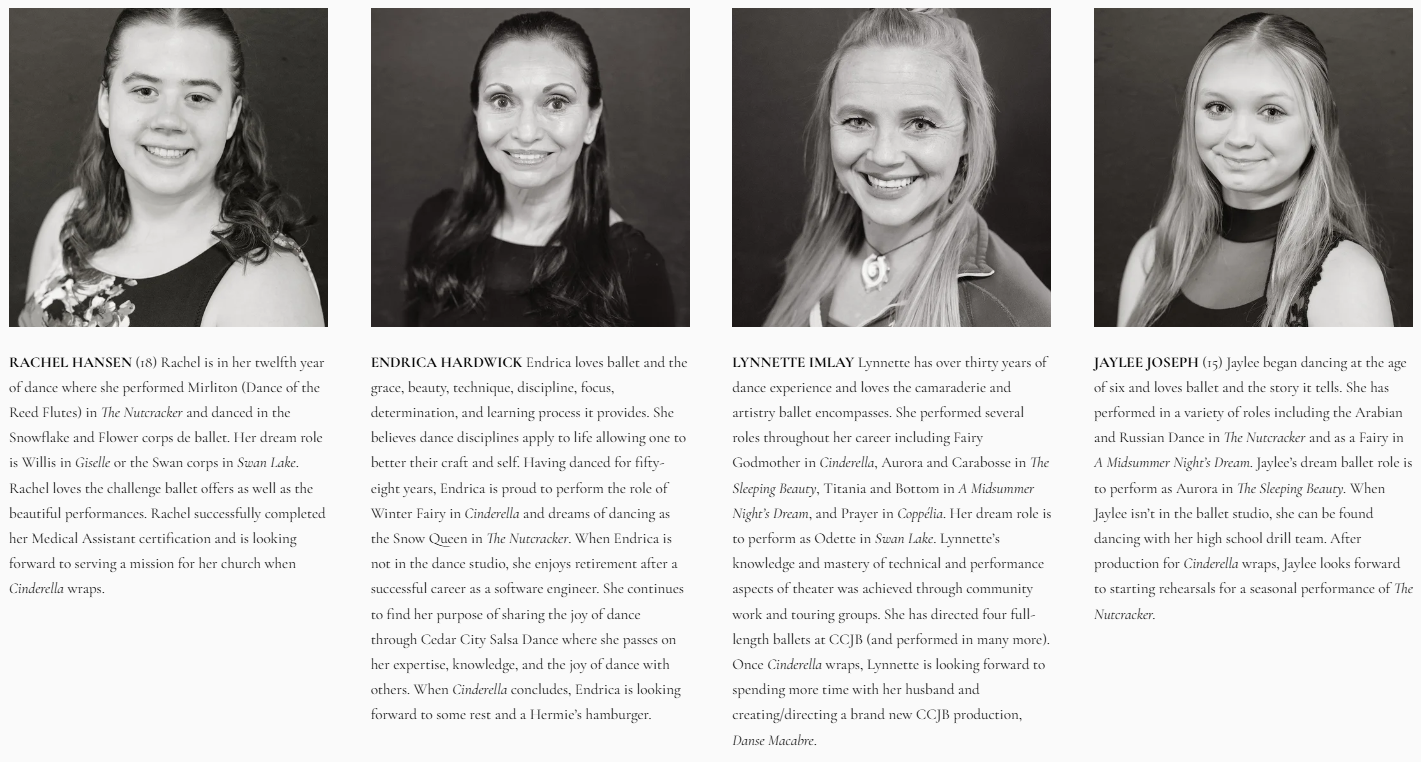
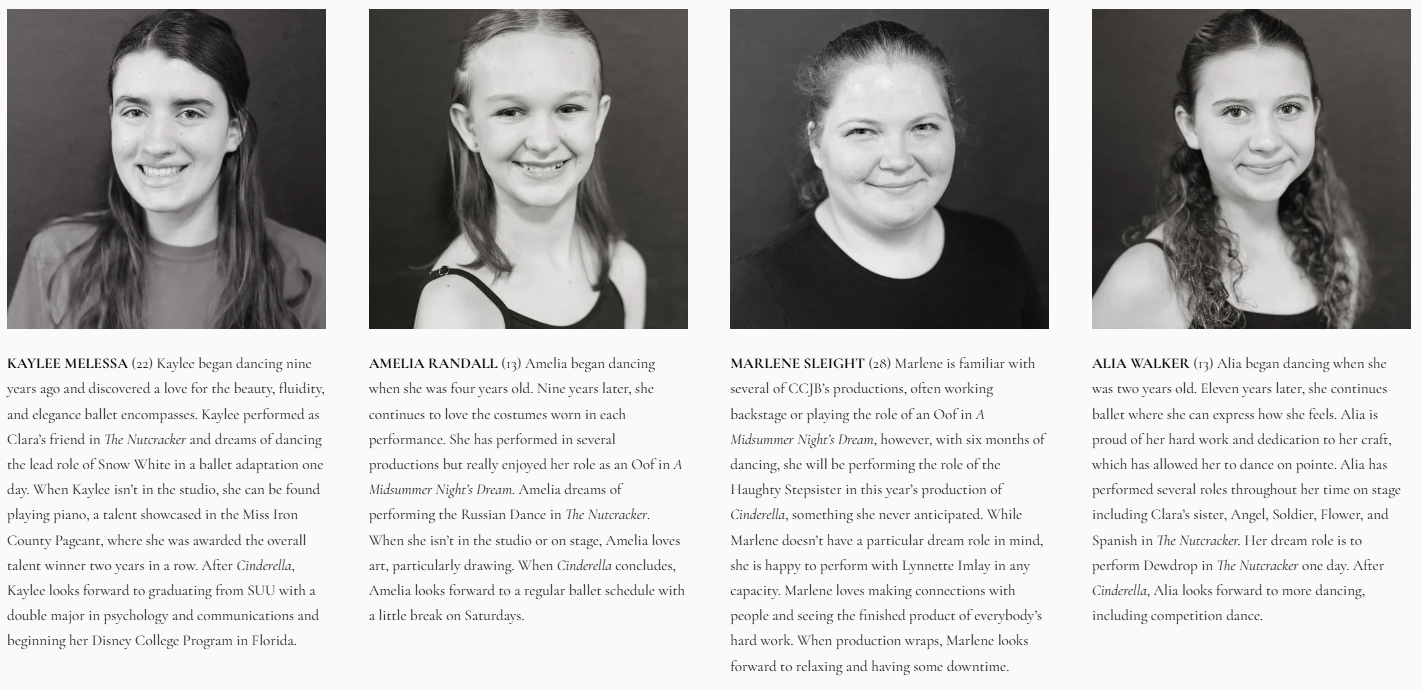
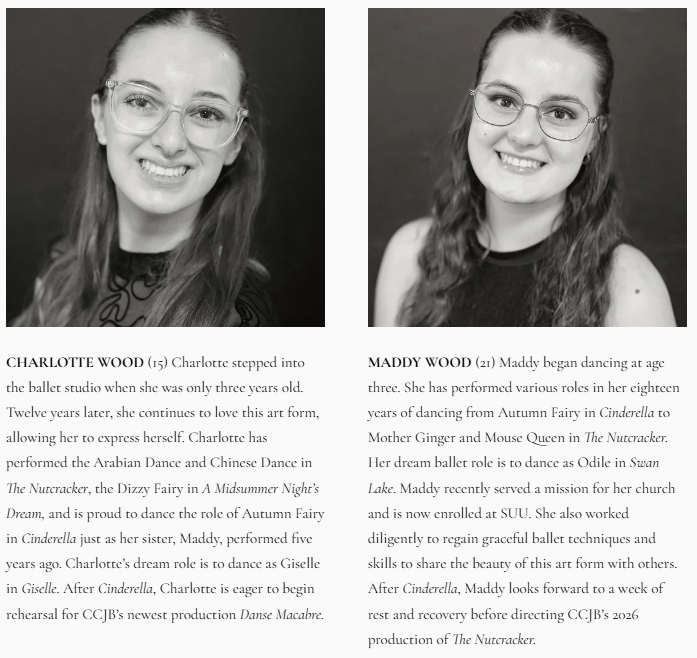
SPECIAL THANKS
Choreography: Based on Ashton with adaptations by Lynnette Imlay
Stage Manager: Lisa Cox
Lighting Design: Christine Pettit
Audio Engineer: Ana Olsen
Box Office/Ticketing: Carrington Bonner
Heritage Theater Staff: Jason Clark, Lisa Cox, Michael Cox, Christine Pettit, Michael Westwood
Costume Design: Stephanie Wood
Costume Execution: Stephanie Wood, DeNese Beam, Kathryn Crosby, Heather Hansen, Kayla Randall, Ashley Sjogren, Laura Wise, Charlotte Wood, Maddy Wood
Videography: Southern Utah University
Photography: Shane Egan
Social Media Marketing: Codi Hinkley-Green
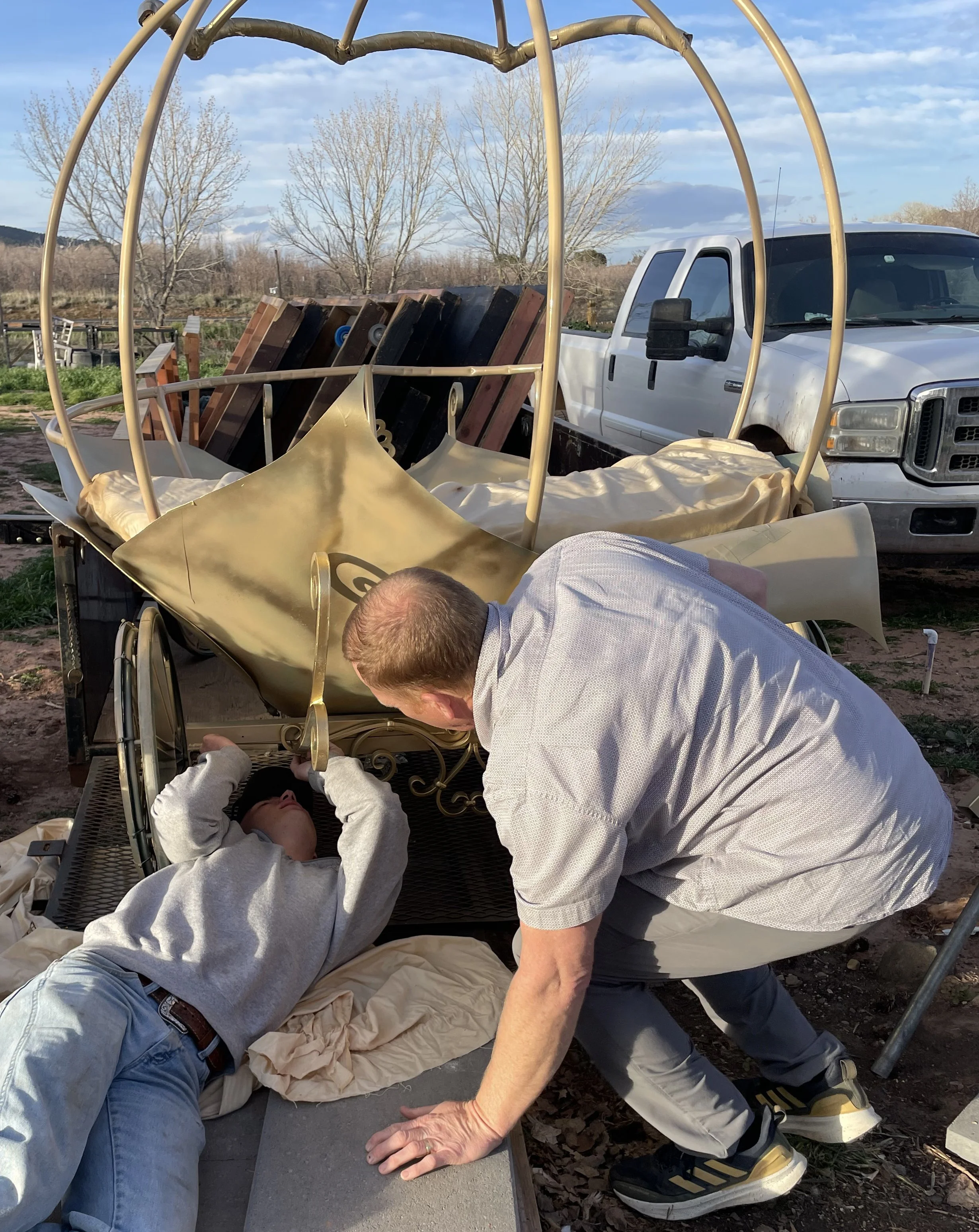
Behind-the-Scenes: Chuck Brandt, Landon Brandt, Shaylee Chappell, Katie Dodds, Katie Hanks
THANK YOU PROGRAM SPONSORS

R. Scott Phillips
Julie & Ed Calkins
Marielle Boneau
Endrica Hardwick
SUPPORT THE ARTS
Cedar City Junior Ballet is a nonprofit, 501c3 organization.
Your support provides a home for community talent and success that allows the company to expand in our studio, create new works, and broaden our communities’ access to the arts. Since 2003 our sponsors and corporate partners have made invaluable contributions to the success of Cedar City Junior ballet and in return, the dancers.
Monetary, in-kind, or volunteer support is an investment in music, the scholarship of a young dancer, personal development, education and outreach. It is truly an investment in the arts and the Cedar City community.